Germany
* February 21, 1938 Witten
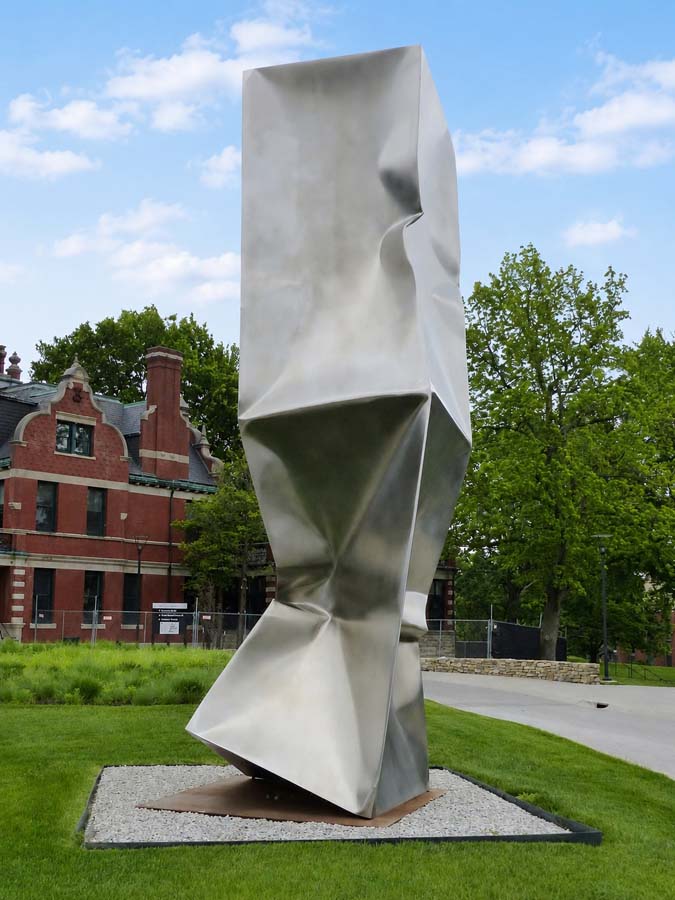
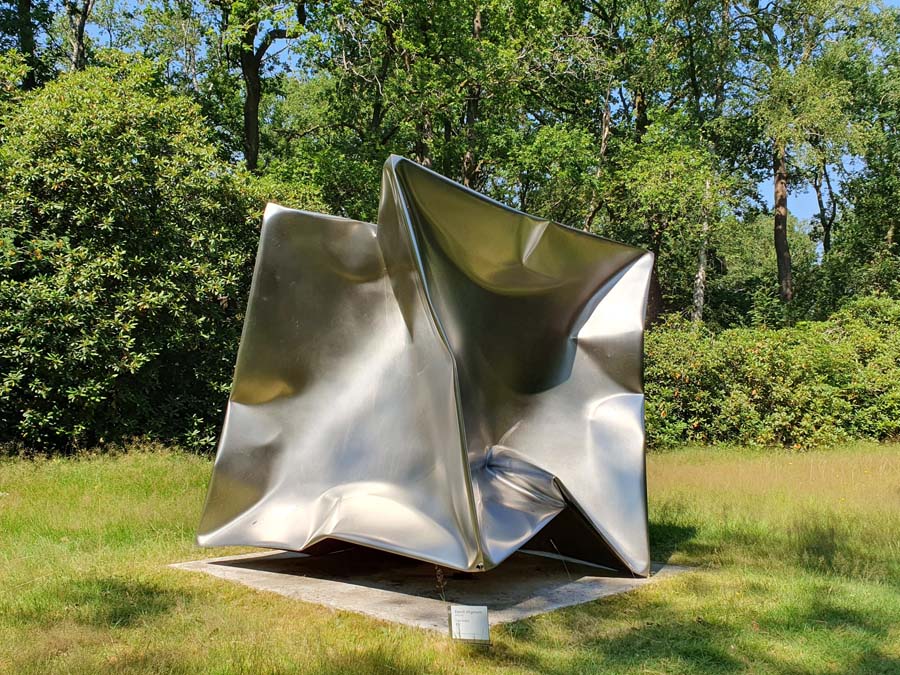
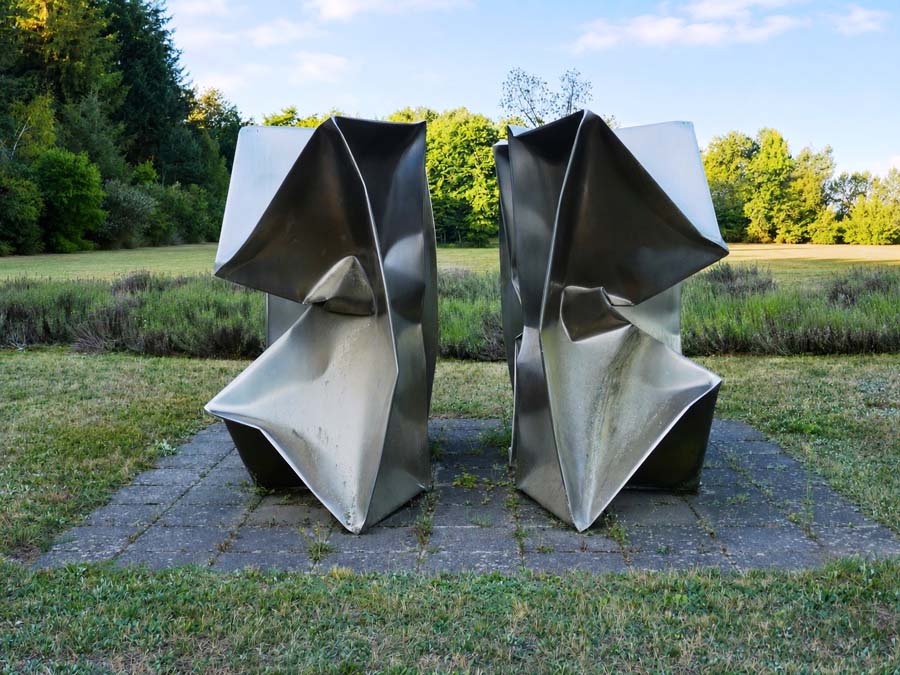
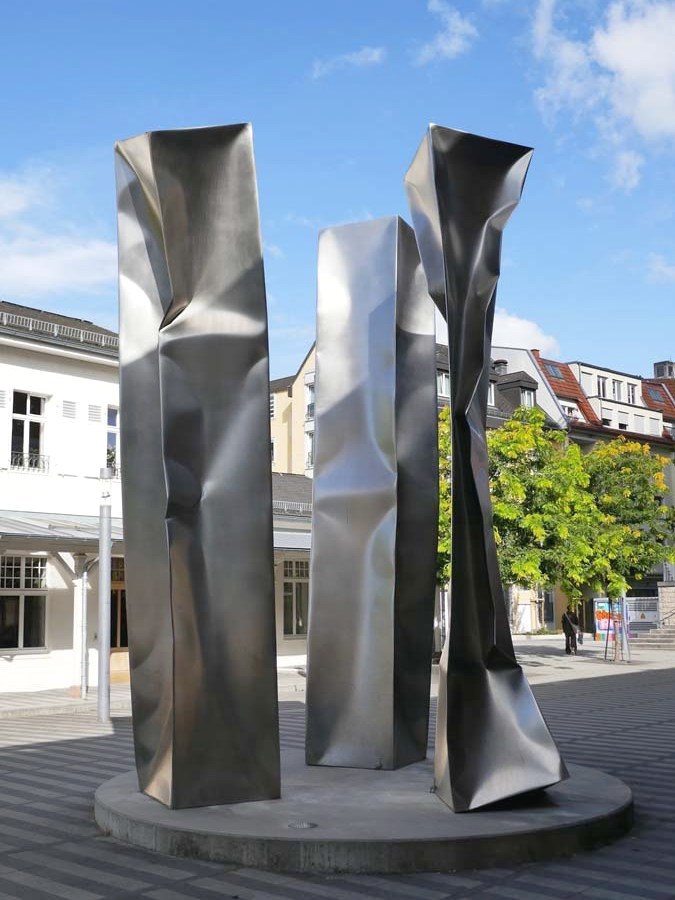
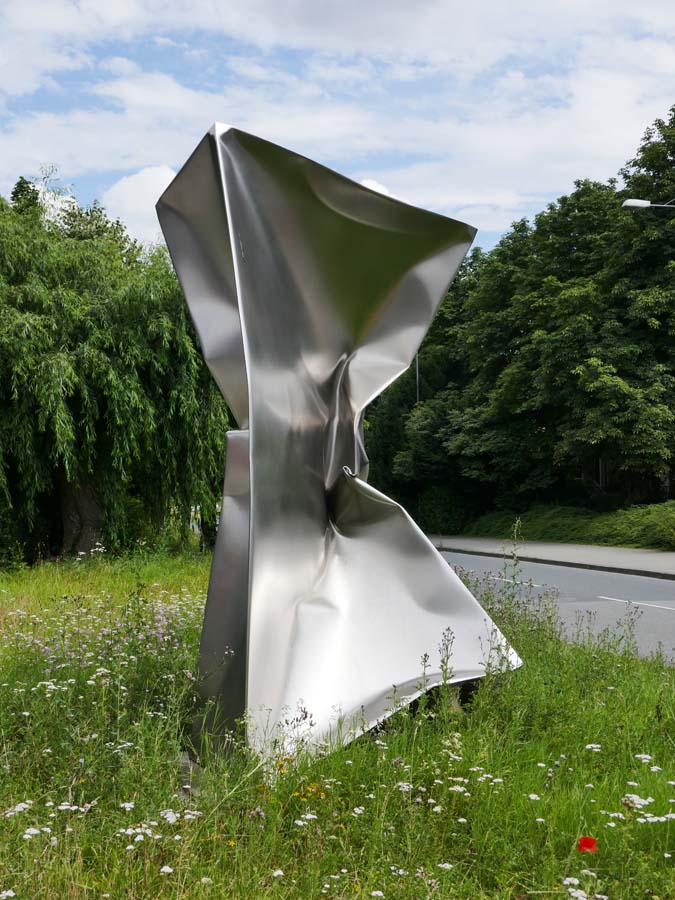
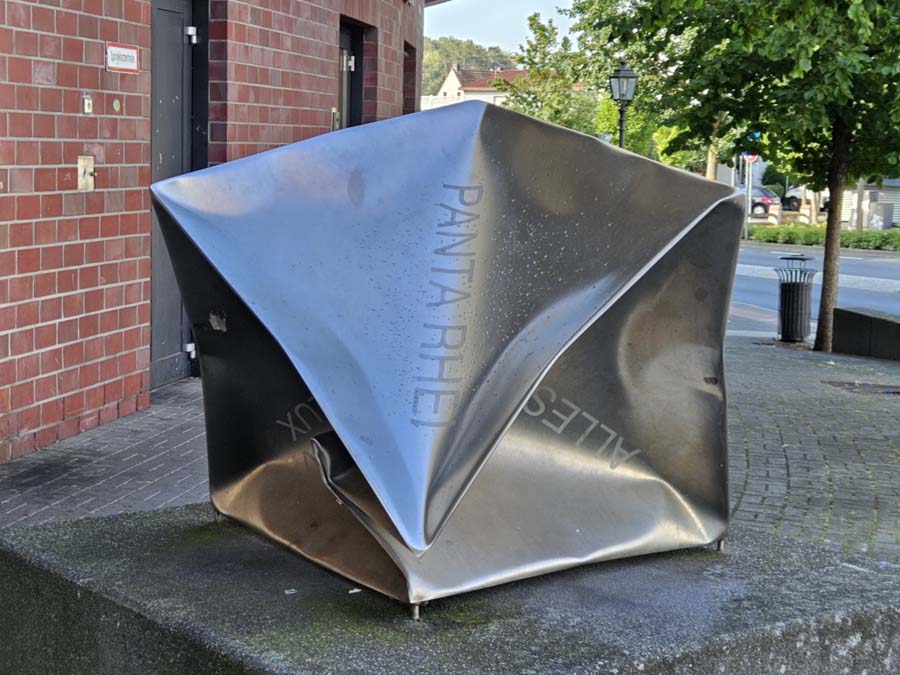
The German-Dutch sculptor Ewerdt Hilgemann is best known for his Implosions, a technique he developed himself in 1984. He begins by creating geometrically perfect cubes, rectangular prisms, or columns out of stainless steel, which are hollow inside and welded airtight. He then gradually extracts the air using a vacuum pump. The immense external air pressure compresses and folds the forms in an unpredictable way, yet in accordance with the laws of physics. As a result, the objects appear as if they had been deformed by tremendous external forces.
The final character of the sculptures depends a lot on chance and can be controlled only to a limited extent. Although Hilgemann plans the final form, each implosion unfolds in a unique way. No one – not even the artist himself – can fully control the exact nature of the deformation.
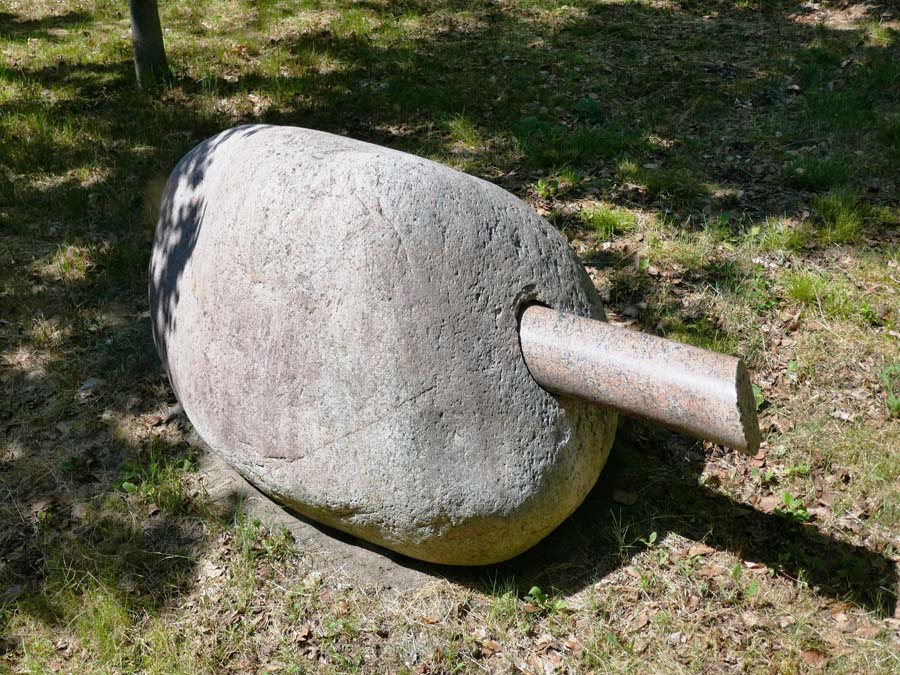
From 1975 to 1984, Hilgemann worked intensively in the marble quarries of Carrara, where he maintained his own studio for a time. While he created a lot of strictly geometric works in marble and granite, he was already exploring the concept of controlled destruction through natural forces and chance. His Rolling Cube became famous in 1982 – a massive, perfectly polished marble cube that he set rolling down a quarry slope. Although the cube remained recognizable of its form, it was marked by the traces of its tumble.
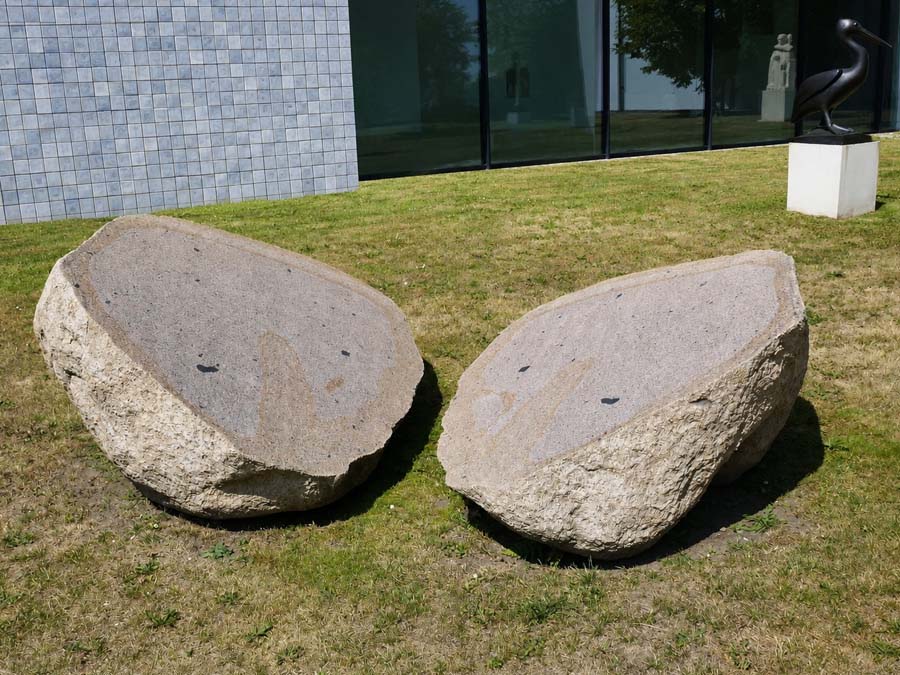
At similar art installations in 1983, Hilgemann had a Carrara marble sphere of one meter in diameter deliberately blown apart, presenting the fragments as sculptures. That same year, at the Oost West Forum in Dordrecht, he pushed a welded steel cube off the roof of a high-rise building. In both instances, the artist’s focus was not on the finished object itself, but rather on the process – observing in real time how a familiar form changes under the impact of force.